Custom Software Development
Give employees, customers, or partners an application that reflects how they work. Define the rules, permissions, and handoffs that a packaged tool struggles to support.
Explore custom softwareSoftware Engineering
From purpose-built applications and enterprise integrations to legacy modernization and intelligent automation, CatchFoundry helps businesses turn demanding technology requirements into practical solutions.
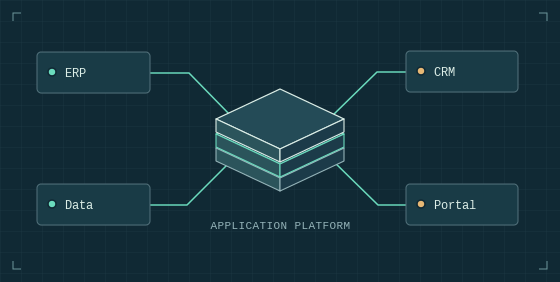
A project may start with one slow handoff, an aging application, or a product idea. We trace that need through the systems and people it affects.
Give employees, customers, or partners an application that reflects how they work. Define the rules, permissions, and handoffs that a packaged tool struggles to support.
Explore custom softwareConnect ERP and CRM platforms, SaaS products, databases, and trading partners. Make ownership of each record clear and give operators a way to resolve exceptions.
Explore systems integrationUpdate applications, databases, and infrastructure in manageable stages. Preserve the business rules people depend on while making the next change easier to deliver.
Explore modernizationRoute repetitive work through business rules and connected systems. Use AI for tasks such as document classification where examples and human review can guide its use.
Explore workflow automationA packaged system might already handle most of your process. The expensive part can be the gap between recording an order, checking its terms, and handing it to fulfillment.
We examine the cost of that gap, the limits of existing tools, and the people who will maintain the result. The right scope might be a single integration, an extension to your platform, or a purpose-built application.
Discuss your engineering requirementsWalk through a real task with the people doing it. Agree on the problem, constraints, and measures of success.
Map the data, interfaces, and ownership boundaries. Compare delivery options and document the important tradeoffs.
Build a working slice early so stakeholders can try it and refine the next release.
Connect surrounding systems and test with representative records, permissions, and exceptions.
Review business acceptance criteria, operational behavior, and readiness with the people who will run the solution.
Hand over documentation, agree on support responsibilities, and use feedback to prioritize improvements.
Yes. We review the application, its dependencies, and the team’s release process before scoping enhancements. A short assessment can clarify what can safely change first.
Often, yes. We look for supported interfaces, scheduled exports, messaging, or controlled database access and confirm what the system vendor permits.
The scope can cover discovery through handoff or a defined part of a project. We agree on decision owners, review points, environments, and responsibilities with your team.
Scope, complexity, access to systems, data quality, and testing requirements all affect effort. We identify uncertainties in discovery and tie the estimate to specific deliverables.
Yes. A first release can support one team, workflow, or partner. We agree on what makes that release usable and what evidence should guide the next phase.
Support can include issue investigation, updates, and planned enhancements. Coverage and responsibilities are agreed as part of the engagement.
Bring the workflow, technical constraints, and operating requirements. Together we can identify a practical first phase.